Blog

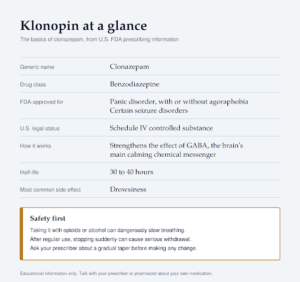
Klonopin is the brand name for clonazepam, a prescription medicine in a group of drugs called benzodiazepines. Doctors prescribe it for panic disorder and for certain types of seizures. It works by calming overactive signaling in the brain, which is also why it often makes people sleepy.
This guide explains what Klonopin is, what the FDA has approved it for, the main risks, and the questions patients most often bring to a pharmacist. It isn’t a dosing guide. Your prescriber sets your dose based on your health history, and any change to that dose should go through them.
What Is Klonopin?
Klonopin is a brand-name prescription medication that contains clonazepam. Clonazepam is a benzodiazepine that slows activity in the central nervous system. In the U.S., it is FDA-approved to treat panic disorder and certain seizure disorders.
The brand-name tablets come in 0.5 mg, 1 mg and 2 mg strengths. Generic clonazepam contains the same active ingredient and is far more commonly dispensed. Generic manufacturers have to show the FDA that their product delivers the drug to the body in an equivalent way. Clonazepam is also sold as an orally disintegrating tablet that dissolves on the tongue, but this form is generic only.
The central nervous system is made up of the brain and spinal cord. Clonazepam makes the brain’s main calming chemical messenger, called GABA, work more effectively. The result is less excitable nerve activity. For someone with panic disorder, that can mean fewer or less intense panic symptoms. For someone with a seizure disorder, it can mean fewer seizures.
That same calming effect is why Klonopin requires a prescription. It can cause drowsiness and slowed reactions. It can also lead to dependence, and it interacts with alcohol and many common medicines. A prescriber has to weigh these risks against the benefits for each patient. The federal government also regulates it as a controlled substance, which is covered below.
For a closer look at the brain chemistry, see [How Does Klonopin Work? Clonazepam Explained].
What Is Klonopin Used For?
The FDA has approved Klonopin for two groups of conditions. They are quite different from each other.
Panic disorder
Klonopin is approved to treat panic disorder, with or without agoraphobia. Panic disorder is not the same as feeling nervous before a presentation. It involves repeated, unexpected panic attacks. These are sudden surges of fear with symptoms such as a pounding heart, shortness of breath, chest discomfort, trembling or a sense of losing control. People with panic disorder also spend at least a month worrying about the next attack or changing their behavior to avoid one.
The FDA label notes that placebo-controlled studies have not systematically tested clonazepam for panic disorder beyond about nine weeks. Prescribers who continue it longer are expected to reassess periodically whether it’s still needed. Antidepressants such as SSRIs and cognitive behavioral therapy are common first-line treatments for panic disorder. Klonopin is sometimes used alongside them or for a limited period while they take effect.
Seizure disorders
Klonopin is approved, alone or with other seizure medicines, for several seizure types:
- Lennox-Gastaut syndrome, a severe form of childhood-onset epilepsy
- Akinetic seizures, which cause a sudden loss of muscle tone
- Myoclonic seizures, which cause brief jerking movements
- Absence seizures (petit mal) that have not responded to a class of seizure medicines called succinimides
One challenge with seizure treatment is tolerance. The label reports that in some studies, up to 30% of patients lost some of the anticonvulsant benefit, often within the first three months. A neurologist may adjust the treatment plan if that happens.
What Klonopin is not approved for
Klonopin is not FDA-approved for generalized anxiety disorder, social anxiety, everyday stress or insomnia. Prescribers sometimes use clonazepam off-label for other conditions, such as certain sleep-related movement disorders. Off-label use means the FDA has not reviewed evidence for that specific purpose. It’s a legal and sometimes appropriate medical decision, but it’s one to discuss openly with your prescriber.
How Does Klonopin Work?
Picture GABA as the brain’s braking system. When GABA attaches to its receptors on nerve cells, those cells become less likely to fire. Clonazepam attaches to a separate spot on the same receptor, called GABA-A, and makes GABA’s braking signal stronger.
Clonazepam doesn’t create calm out of nothing. It amplifies a signal the brain already produces. When nerve activity runs too high, as it does during a panic attack or a seizure, boosting the brakes can bring it back toward a normal range.
That’s the short version. Our article [How Does Klonopin Work? Clonazepam Explained] covers receptors, timing and why the drug causes drowsiness in more detail.
Is Klonopin a Benzodiazepine?
Yes. Clonazepam is a benzodiazepine, sometimes shortened to “benzo.” This class of medicines has been in use since the 1960s. Other well-known benzodiazepines include alprazolam (Xanax), lorazepam (Ativan) and diazepam (Valium).
All benzodiazepines strengthen GABA’s effects. They differ in how quickly they start working, how long they stay in the body and which conditions they’re approved for. Clonazepam is considered long-acting because the body takes a relatively long time to clear it.
Benzodiazepines are not the same as other medicines used for anxiety or seizures. SSRIs such as sertraline act on serotonin, usually take several weeks to reach full effect, and are not controlled substances. Buspirone treats generalized anxiety without acting on GABA receptors in the same way. Sleep drugs like zolpidem affect the same receptor complex but are chemically different. Many seizure medicines work through entirely different mechanisms.
Is Klonopin a Controlled Substance?
Yes. Under federal law, clonazepam is a Schedule IV controlled substance. Schedule IV drugs have accepted medical uses and a lower potential for misuse than drugs in Schedules I through III. They can still lead to dependence. Wikipedia
The schedule affects how the medication is prescribed and filled:
- Federal rules allow a Schedule IV prescription to be refilled up to five times within six months of the date it was written. After that, a new prescription is needed.
- Many states set stricter limits. Pharmacists check state prescription drug monitoring programs before filling controlled prescriptions.
- Pharmacies may decline early refills.
- Giving or selling clonazepam to anyone else is illegal, even if they have similar symptoms.
Store Klonopin somewhere secure and out of reach of children and visitors. If you have leftover tablets, bring them to a drug take-back site or ask our pharmacist about safe disposal.
Is Klonopin Addictive?
Clonazepam can cause dependence and, in some people, addiction. These words describe different things, and the difference matters.
Physical dependence means the body has adjusted to the medicine and reacts when it’s reduced or stopped. It can happen to anyone who takes clonazepam regularly, including people who take it exactly as prescribed. Dependence alone does not mean addiction.
Tolerance means the same dose produces less effect over time. People often become tolerant to the drowsiness first, which can be helpful. In seizure treatment, tolerance to the anticonvulsant effect can be a problem.
Misuse means taking the medicine differently than prescribed. Examples include taking extra doses, taking someone else’s pills or combining it with alcohol to feel a stronger effect.
Addiction, clinically called a substance use disorder, involves compulsive use that continues despite harm to health, work or relationships.
In 2020 the FDA required a boxed warning, its strongest label warning, for all benzodiazepines. It covers abuse, misuse, addiction, physical dependence and withdrawal. According to the label, the risk of dependence and withdrawal grows with longer treatment and higher daily doses. A personal or family history of substance use disorder can raise the risk of misuse. Tell your prescriber about any such history, even if it was years ago.
Stopping suddenly is the part patients most need to know. After continued use, stopping clonazepam abruptly or cutting the dose quickly can cause acute withdrawal reactions that may be life-threatening. Symptoms can include rebound anxiety, sleep problems, tremor and agitation. In severe cases, seizures can occur, even in people who have never had one. If you want to stop or reduce Klonopin, your prescriber can plan a gradual taper for you. Don’t try to create one on your own.
Common Klonopin Side Effects
Most side effects of clonazepam come from its calming effect on the nervous system.
Drowsiness is the most common. In the panic disorder studies described in the FDA label, about 37% of people taking clonazepam reported sleepiness. In people treated for seizures, about half experienced drowsiness.
Other common effects include:
- Dizziness or lightheadedness
- Fatigue
- Problems with coordination and balance (ataxia), which affected about 3 in 10 people treated for seizures
- Memory problems and slowed thinking, such as trouble recalling recent events or concentrating
Some effects are less frequent but still worth knowing. In the short-term panic disorder trials, depression was reported by 7% of people on clonazepam compared with 1% on placebo. Children treated for seizures sometimes have behavior changes or increased saliva. DailyMed
Some side effects fade as the body adjusts over the first days or weeks. If an effect lasts, interferes with daily life or worries you, tell your prescriber rather than changing the dose yourself. You can also report side effects to the FDA at 1-800-FDA-1088. FDA
Serious Klonopin Risks and Warnings
Some risks are uncommon but serious enough that everyone taking clonazepam should know about them.
Opioids. This is the most dangerous combination. Taking benzodiazepines with opioids can cause profound sedation, slowed breathing, coma and death. This includes prescription pain medicines such as oxycodone or hydrocodone, opioid cough syrups, and illicit opioids like fentanyl.
Slowed breathing. Clonazepam can suppress breathing, especially in people with COPD, sleep apnea or other lung conditions.
Heavy sedation and next-day impairment. Because clonazepam stays in the body for a long time, drowsiness and slowed reactions can carry into the next day.
Falls and coordination problems. Older adults face a higher risk of falls and fractures.
Driving and machinery. Don’t drive or operate machinery until you know how clonazepam affects you. Some people feel alert but still have slower reaction times.
Mood changes and suicidal thoughts. Like other medicines used for seizures, clonazepam carries a warning about an increased risk of suicidal thoughts or behavior. Watch for new or worsening depression and unusual changes in mood. Family members can help notice these changes.
Pregnancy. Using benzodiazepines late in pregnancy can cause sedation or withdrawal symptoms in newborns. If you’re pregnant or planning to be, talk with your prescriber. Don’t stop suddenly on your own.
Occasionally, people have the opposite of the expected reaction, such as agitation, irritability or aggression. Report this to your prescriber.
Klonopin and Alcohol
Alcohol and clonazepam both slow down the central nervous system. Taken together, their effects add up. The result can be heavier sedation, worse coordination, memory blackouts and, at higher amounts, dangerously slow breathing.
No amount of alcohol has been shown to be safe with clonazepam, and the prescribing information advises against combining them. Alcohol can also worsen anxiety and sleep, and it can make seizures harder to control.
If you drink regularly, tell your prescriber before starting Klonopin. Stopping heavy drinking suddenly carries its own withdrawal risks, so any change should be planned with medical guidance.
Klonopin and Other Medications
Clonazepam can interact with other medicines in two main ways.
The first is stacking sedation. Other drugs that slow the nervous system can add to clonazepam’s effects. Examples include opioids, other benzodiazepines, sleep medicines, some antidepressants and antipsychotics, muscle relaxants, gabapentin and pregabalin, sedating antihistamines found in many nighttime cold and allergy products, and cannabis.
The second is changing clonazepam levels in the blood. The liver breaks down clonazepam, mainly through an enzyme called CYP3A. Medicines that speed up this enzyme, such as carbamazepine, phenytoin and phenobarbital, can lower clonazepam levels. Some drugs that slow this enzyme, including certain antifungals, may raise them.
Supplements matter too. Herbal products marketed for sleep or relaxation can add to drowsiness. Keep an up-to-date list of everything you take, including prescription drugs, over-the-counter products and supplements. Have a pharmacist or prescriber review it before starting clonazepam and whenever something new is added. Filling all your prescriptions at one pharmacy makes it easier to catch interactions.
How Long Does Klonopin Stay in Your System?
Clonazepam has a long elimination half-life. According to the FDA label, it typically takes 30 to 40 hours for the amount in the blood to drop by half. A drug is usually considered mostly cleared after about five half-lives. For many people, that means clonazepam remains in the body for roughly a week or more after the last dose. Older age, liver problems and other health factors can extend that time.
How long the drug stays in your body is different from how long you feel it. The noticeable calming effect usually lasts several hours. The drug keeps circulating well after that. That’s also why clonazepam builds up gradually over the first several days of regular use, and why some people feel drowsy the morning after a dose.
If you’re asked to take a drug test for work or another reason, tell the person running it that you have a valid prescription. Bring documentation if you can.
Who Should Talk With Their Doctor Before Taking Klonopin?
Some people should not take clonazepam at all. The FDA label lists three contraindications: significant liver disease, acute narrow-angle glaucoma, and a past allergic reaction to any benzodiazepine.
Others may be able to take it but need a careful conversation with their prescriber first. Tell your doctor if you:
- Have lung disease, sleep apnea or other breathing problems
- Have kidney disease
- Have a history of depression, suicidal thoughts or other mood changes
- Have a personal or family history of alcohol or drug misuse
- Take opioids or any other medicine that causes drowsiness
- Are pregnant, planning a pregnancy or breastfeeding
- Are 65 or older, since sensitivity to sedation and fall risk increase with age
- Have porphyria
- Drive for work or operate heavy machinery
None of these facts means you can’t be treated. They help your prescriber choose the safest option for you.
When Should You Seek Medical Help?
Call 911 right away if someone taking clonazepam:
- Has slow, shallow or irregular breathing
- Cannot be woken or is very hard to wake
- Has blue or gray lips or fingertips
- Is severely confused or unresponsive
- Has a seizure
- Shows signs of a severe allergic reaction, such as swelling of the face, lips, tongue or throat, trouble breathing, or widespread hives
If you suspect an overdose, call 911 first, especially if the person has also taken opioids or alcohol. For questions about a possible overdose in someone who is awake and breathing normally, you can contact Poison Help at 1-800-222-1222, which is available 24 hours a day.
If you or someone you know is having thoughts of suicide, call or text 988 to reach the 988 Suicide & Crisis Lifeline.
Contact your prescriber soon if you notice worsening mood, new or more frequent seizures, unusual behavior, withdrawal symptoms after a missed dose, or if you will run out of medication before your next refill.
Frequently Asked Questions About Klonopin
What is Klonopin?
Klonopin is the brand name of clonazepam, a prescription benzodiazepine used to treat panic disorder and certain seizure disorders.
What is clonazepam?
Clonazepam is the generic name of the active ingredient in Klonopin. Generic clonazepam tablets contain the same medicine and are far more commonly dispensed than the brand.
What is Klonopin used for?
The FDA has approved it for panic disorder, with or without agoraphobia, and for several seizure types, including those seen in Lennox-Gastaut syndrome. Other uses are off-label.
Is Klonopin a benzodiazepine?
Yes. It belongs to the same class as alprazolam (Xanax), lorazepam (Ativan) and diazepam (Valium), and it is one of the longer-acting members of the class.
Is Klonopin a controlled substance?
Yes, it is Schedule IV under federal law. This limits refills and means the prescription is tracked through state monitoring programs.
Is Klonopin addictive?
It can be. Physical dependence can develop even with prescribed use, and some people develop a substance use disorder. The risk rises with higher doses, longer use and a history of substance misuse.
Does Klonopin make you sleepy?
Often, yes. Drowsiness is the most commonly reported side effect, and it can last into the next day. Avoid driving until you know how it affects you.
Can you drink alcohol while taking Klonopin?
It’s best not to. Alcohol intensifies clonazepam’s sedating effects and can slow breathing. No safe amount has been established.
How long does Klonopin stay in your system?
Its half-life is 30 to 40 hours, so it can take a week or more to leave the body. You feel the effects for a much shorter time than that.
Can you stop taking Klonopin suddenly?
If you’ve been taking it regularly, no. Stopping abruptly can cause serious withdrawal, including seizures. Ask your prescriber about a gradual taper.
Medical Disclaimer
This article is for general educational purposes only and does not replace advice from your doctor, pharmacist or other qualified healthcare provider. Do not start, stop or change the dose of any medication without talking to your prescriber. If you think you or someone else is having a medical emergency, call 911.
Sources and References
- U.S. Food and Drug Administration / DailyMed. Klonopin (clonazepam) tablets, prescribing information and Medication Guide. https://dailymed.nlm.nih.gov/dailymed/lookup.cfm?setid=cfa0d79a-843c-4b88-95a1-e9511d649ca1
- U.S. Food and Drug Administration. Klonopin label, Drugs@FDA. https://www.accessdata.fda.gov/drugsatfda_docs/label/2021/017533s061lbl.pdf
- U.S. Food and Drug Administration. FDA requiring Boxed Warning updated to improve safe use of benzodiazepine drug class (September 2020). fda.gov
- U.S. Drug Enforcement Administration. Benzodiazepines drug fact sheet. dea.gov
- Code of Federal Regulations, 21 CFR 1306.22, Refilling of prescriptions (Schedule III and IV).
- MedlinePlus (National Library of Medicine). Clonazepam drug information. https://medlineplus.gov/druginfo/meds/a682279.html
- National Library of Medicine, StatPearls. Clonazepam. NCBI Bookshelf.
- Poison Help, Health Resources and Services Administration. 1-800-222-1222.