Blog

Most side effects of Klonopin (clonazepam) trace back to the same thing that makes it work. It strengthens GABA, the brain’s main calming signal, and that slows activity throughout the central nervous system. For many people, this shows up as drowsiness, dizziness or feeling less coordinated. These effects are often strongest in the first days of treatment and after a dose increase, and some ease with time.
A smaller number of side effects are serious. They include dangerously slowed breathing (especially with opioids or alcohol), dependence, withdrawal and changes in mood. This guide covers both groups, using figures from the FDA prescribing information, so you know what to expect and when to act.
For background on the medication itself, see [What Is Klonopin? A Complete Patient Guide].
The Most Common Klonopin Side Effects
The FDA label reports side effects separately for panic disorder and seizure disorders, since the patients and doses differ.
In people treated for panic disorder
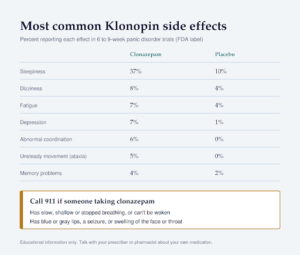
In two 6- to 9-week placebo-controlled studies, these were the most common side effects:
| Side effect | Clonazepam | Placebo |
| Sleepiness (somnolence) | 37% | 10% |
| Dizziness | 8% | 4% |
| Upper respiratory infection | 8% | 4% |
| Fatigue | 7% | 4% |
| Depression | 7% | 1% |
| Abnormal coordination | 6% | 0% |
| Ataxia (unsteady movement) | 5% | 0% |
| Memory problems | 4% | 2% |
About 17% of people taking clonazepam in those studies stopped because of side effects, compared with 9% on placebo. Sleepiness and depression were the most common reasons.
In people treated for seizures
The label reports that in seizure treatment, drowsiness occurred in about 50% of patients and ataxia in about 30%. Behavior problems were noted in about 25%. Some of these effects lessen over time. Seizure patients often take higher doses along with other anticonvulsants, which helps explain the higher numbers.
Drowsiness and Feeling “Slowed Down”
Drowsiness is the side effect people notice most. It can look like wanting to nap, feeling heavy or foggy, or simply having less energy.
It’s usually worst early on. As clonazepam builds up over the first several days, sleepiness can peak. Tolerance to it then often develops over a few weeks. For panic disorder, the label notes that taking one dose at bedtime may help with daytime sleepiness. Talk with your prescriber before changing when you take it.
Because clonazepam lasts a long time in the body, drowsiness and slowed reaction time can carry over to the next morning. The label cautions against driving or operating machinery until you’re reasonably sure clonazepam doesn’t affect you in a harmful way. Some people feel alert but still react more slowly.
Dizziness, Coordination and Falls
Clonazepam can affect balance and fine movement. People describe feeling unsteady on their feet, clumsy with their hands, or having slurred speech at higher doses.
These effects matter most for older adults, who have a higher risk of falls and fractures. The label notes that sedating drugs can cause confusion and over-sedation in older people, and it advises starting at low doses with close monitoring. If you or a family member notices new stumbling, near-falls or confusion, tell the prescriber.
Memory and Thinking
Benzodiazepines can make it harder to form new memories while the drug is active. People sometimes forget parts of conversations or events that happened after a dose. The label also lists reduced concentration and slower thinking.
One detail from the label stands out. People tend to become tolerant to the sleepiness, but little tolerance develops to the memory and thinking effects. So even if you no longer feel drowsy, these effects may still be there. If you notice ongoing memory problems, bring it up with your prescriber.
Mood Changes, Depression and Suicidal Thoughts
In the panic disorder studies, 7% of people taking clonazepam reported depression, compared with 1% on placebo. The label notes that depression rating scores in those studies actually improved more on clonazepam than on placebo. Still, new or worsening low mood should always be reported.
Clonazepam is also an antiepileptic drug. All medicines in that group carry a warning about suicidal thoughts and behavior. Across many studies of these drugs, about 1 in 500 more people had suicidal thoughts or behavior than with placebo, and the risk appeared as early as one week after starting.
Patients, families and caregivers should watch for:
- New or worsening depression or anxiety
- Thoughts about suicide, dying or self-harm
- Agitation, restlessness or irritability
- Acting on dangerous impulses
- Sudden, unusual changes in mood or behavior
Report these to the prescriber right away. If someone is in crisis, call or text 988 to reach the 988 Suicide & Crisis Lifeline, or call 911.
Paradoxical Reactions
Occasionally, clonazepam causes the opposite of the expected effect. The label lists agitation, irritability, aggression, anxiety, anger, nightmares, hallucinations and psychosis. These reactions are more likely in children and older adults. If they happen, the label says the drug should be stopped gradually under medical guidance, not all at once.
Other Side Effects to Know About
The label lists many other effects that have been reported. Some of the more notable ones include:
- Increased saliva. Clonazepam can increase salivation. This matters for people who have trouble handling secretions, such as some children with seizure disorders.
- Sexual side effects. Decreased libido, delayed ejaculation and impotence were reported in a small percentage of people in the panic disorder studies.
- Stomach and appetite changes. Constipation, decreased appetite and abdominal pain have been reported.
- Vision changes. Blurred or double vision has been reported.
- Worsening seizures. In people with more than one seizure type, clonazepam can occasionally make tonic-clonic seizures more frequent. Combined with valproic acid, it may cause absence status, a prolonged state of absence seizures.
For long-term use, the label advises periodic blood counts and liver function tests.
Serious Risks and FDA Warnings
The boxed warning
In 2020, the FDA required a boxed warning, its strongest label warning, for all benzodiazepines, including Klonopin. It covers three areas.
Opioids. Taking benzodiazepines with opioids can cause profound sedation, slowed breathing, coma and death. This applies to prescription pain relievers, some cough medicines and illicit opioids such as fentanyl.
Abuse, misuse and addiction. Clonazepam can be misused, and misuse can lead to addiction, overdose or death. The label says addiction can develop even when it’s taken as prescribed. Serious outcomes are more likely when it’s combined with alcohol, other medicines or street drugs.
Dependence and withdrawal. Regular use can lead to physical dependence. Stopping suddenly or cutting the dose quickly can cause withdrawal reactions that may be life-threatening, including seizures.
Slowed breathing- Clonazepam can depress breathing, particularly in people with lung conditions such as COPD or with sleep apnea. The risk rises sharply with alcohol, opioids and other sedatives.
Withdrawal- Withdrawal symptoms can include anxiety, panic attacks, trouble sleeping, irritability, tremor, sweating, a racing heart, blurred vision, muscle pain and nausea. Severe reactions can include seizures, hallucinations, delirium and suicidal thoughts. Some people develop protracted withdrawal, with symptoms such as anxiety, insomnia, tingling or ringing in the ears lasting weeks to more than 12 months.
A gradual taper planned by your prescriber lowers the risk. We don’t publish taper schedules, since a safe plan has to be built around each person.
Pregnancy and breastfeeding
Clonazepam crosses the placenta. Use late in pregnancy can cause sedation or withdrawal symptoms in newborns, including breathing problems, low muscle tone, irritability and feeding difficulties. Clonazepam also passes into breast milk. Infants exposed through breastfeeding should be watched for sleepiness, poor feeding and poor weight gain.
If you’re pregnant, planning a pregnancy or breastfeeding, talk with your prescriber. Don’t stop clonazepam on your own.
Allergic reactions
Allergic reactions are uncommon but possible. People with a known allergy to any benzodiazepine shouldn’t take clonazepam.
Who Is More Likely to Have Side Effects?
Some people are more sensitive to clonazepam or face higher risks:
- Older adults
- People with liver or kidney disease
- People with lung disease or sleep apnea
- People who drink alcohol or take opioids, sleep medicines or other sedating drugs
- People with a history of depression, suicidal thoughts or substance use
- People taking higher doses or taking it for a long time
If any of these apply to you, make sure your prescriber and pharmacist know.
How to Manage Everyday Side Effects
Some practical steps can help with milder side effects. Always check with your prescriber before changing how you take your medicine.
- Give yourself time before driving, and avoid it entirely if you feel drowsy.
- Get up slowly from sitting or lying down if you feel dizzy.
- Keep walkways clear and use night lights to lower the risk of falls.
- Avoid alcohol completely.
- Write down important information if you notice memory gaps.
- Keep a short symptom diary to share at your next appointment.
You can also report side effects to the FDA through MedWatch at 1-800-FDA-1088.
When to Call a Doctor or 911
Call 911 right away if someone taking clonazepam:
- Has slow, shallow or stopped breathing
- Can’t be woken or is extremely hard to wake
- Has blue or gray lips or fingertips
- Has a seizure, especially a new or prolonged one
- Has swelling of the face, lips, tongue or throat, or trouble breathing
- Talks about suicide or has attempted self-harm
For questions about a possible overdose, contact Poison Help at 1-800-222-1222.
Call your prescriber soon for drowsiness that affects daily life, new memory or thinking problems, mood changes, unusual behavior, worsening seizures or withdrawal symptoms after missed doses.
Frequently Asked Questions
What is the most common side effect of Klonopin?
Drowsiness. In panic disorder studies, 37% of people on clonazepam reported sleepiness, compared with 10% on placebo.
Do Klonopin side effects go away?
Some do. Many people become tolerant to drowsiness within a few weeks. Memory and thinking effects may persist, so mention them to your prescriber.
Can Klonopin cause depression?
Depression was reported by 7% of people in panic disorder studies, compared with 1% on placebo. Report any new or worsening low mood right away.
Can Klonopin cause memory loss?
It can make it harder to form new memories while it’s active. The label notes that little tolerance develops to this effect.
Does Klonopin cause weight gain?
Weight gain and weight loss have both been reported, but neither is among the most common effects. Talk with your prescriber if you notice a change.
What are the long-term side effects of Klonopin?
Longer use raises the risk of dependence, tolerance and withdrawal. It can also cause ongoing effects on memory and coordination. The label advises periodic blood and liver tests during long-term treatment.
Is Klonopin safe for older adults?
Older adults are more sensitive to sedation and more likely to fall. The label recommends starting at low doses with close monitoring.
What should I do if I have side effects?
Tell your prescriber or pharmacist. Don’t stop or reduce your dose on your own, because stopping suddenly can cause withdrawal.
Medical Disclaimer
This article is for general educational purposes only and does not replace advice from your doctor, pharmacist or other qualified healthcare provider. It does not list every possible side effect. Do not start, stop or change the dose of any medication without talking to your prescriber. If you think you or someone else is having a medical emergency, call 911.
Sources and References
- U.S. Food and Drug Administration / DailyMed. Klonopin (clonazepam) tablets, prescribing information and Medication Guide. https://dailymed.nlm.nih.gov/dailymed/lookup.cfm?setid=cfa0d79a-843c-4b88-95a1-e9511d649ca1
- U.S. Food and Drug Administration. Benzodiazepine class Boxed Warning update, Drug Safety Communication (September 2020). fda.gov
- MedlinePlus (National Library of Medicine). Clonazepam. https://medlineplus.gov/druginfo/meds/a682279.html
- National Library of Medicine, LactMed. Clonazepam. https://ncbi.nlm.nih.gov/books/n/lactmed/LM344
- U.S. Food and Drug Administration. MedWatch Safety Information and Adverse Event Reporting Program. 1-800-FDA-1088.
- 988 Suicide & Crisis Lifeline. 988lifeline.org